The best pillow for side sleepers is the one that still fills the gap between your ear and your shoulder at 3 a.m., not the one that felt perfect in the thirty seconds you spent pressing on it in the store. I have been chasing that pillow for fifteen years. I slept on a Tempurpedic foam pillow for two decades, returned more Amazon pillows than I can count, and I now keep a night-by-night log of neck pain, tossing and turning, and overheating because my memory is generous and my neck is not.
This comparison covers four very different answers to the same problem. Two are traditional pillow sets, one is a full body pillow built for side sleeping, and one is a cervical traction device that is not a sleeping pillow at all but earns its place next to the bed anyway. My husband Tom is a lifelong side sleeper, I sleep on my back, and our guest bed gets stomach sleepers, so everything here gets judged in all three positions.
The short answer: for most side sleepers, the adjustable memory foam set is the most flexible buy, the down alternative set is the better value, the body pillow is the fix for shoulder pain, and the traction device is a ten minute tool rather than a pillow. The longer answer is about loft, fill, and how a pillow behaves in month three.
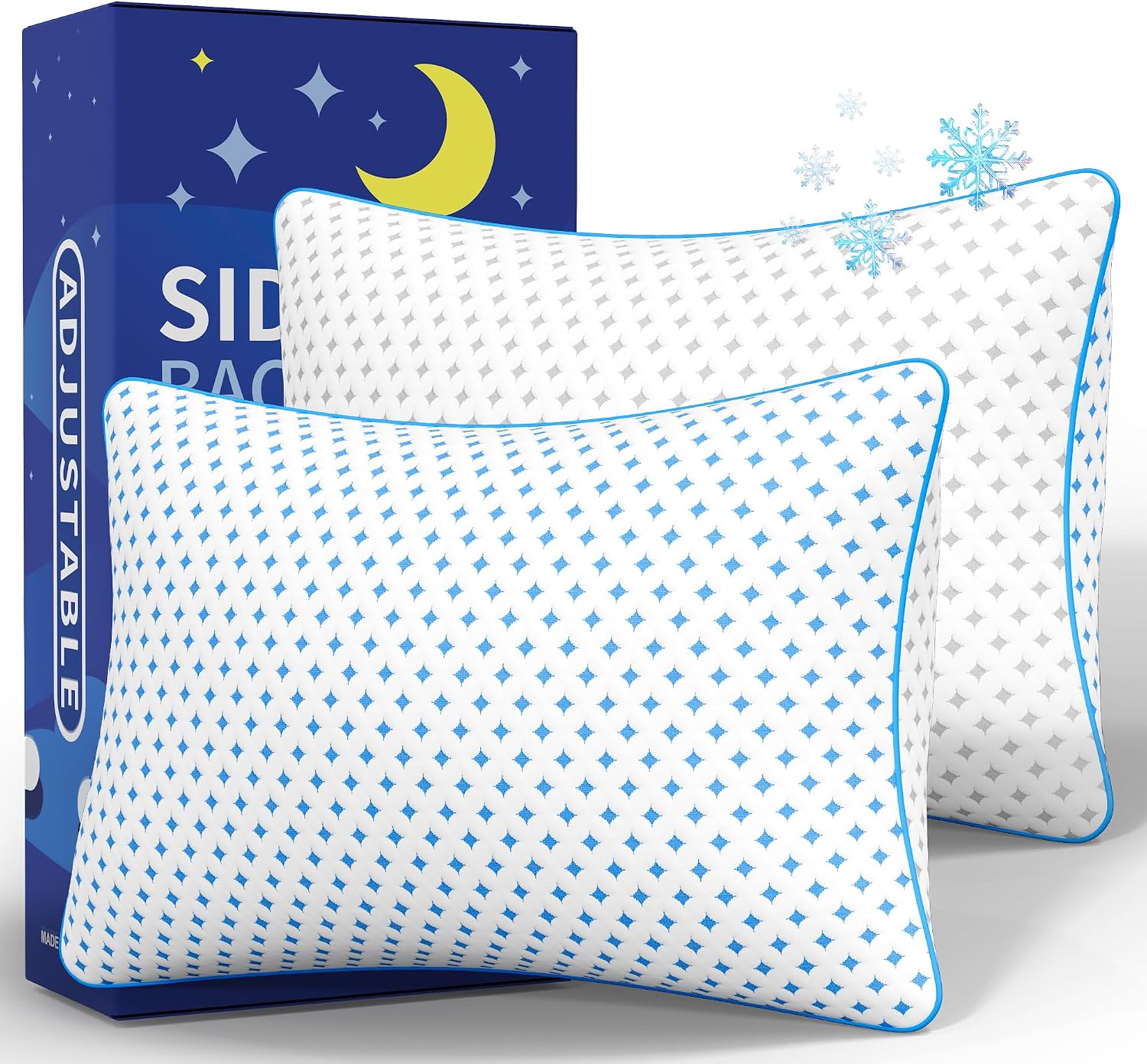
Pillows Queen Size Set of 2, Cooling Adjustable Memory Foam, Dual Fill Design
Adjustable fill and a washable cover, so you tune the loft instead of guessing at it
The cooling claim lives on the cover, and a cover does not cool the fill at 2 a.m.
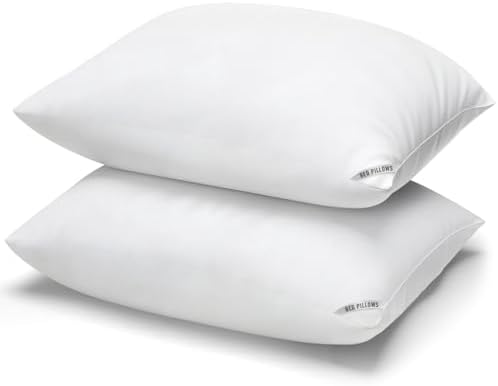
Piwaal Luxury Hotel Pillows, 2 Pack, Down Alternative, Standard Size
Down alternative fill marketed for back, stomach, and side sleepers, which is rarer than it should be
"Luxury hotel" is a phrase, not a specification, so the stitching and casing have to carry it
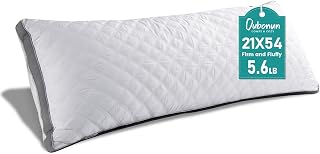
Oubonun Full Body Pillow for Side Sleeper, Adjustable Firm Long Bed Pillow
Long enough to support a shoulder and a hip at the same time, with adjustable firmness
It takes up half a queen bed, and it is not a head pillow
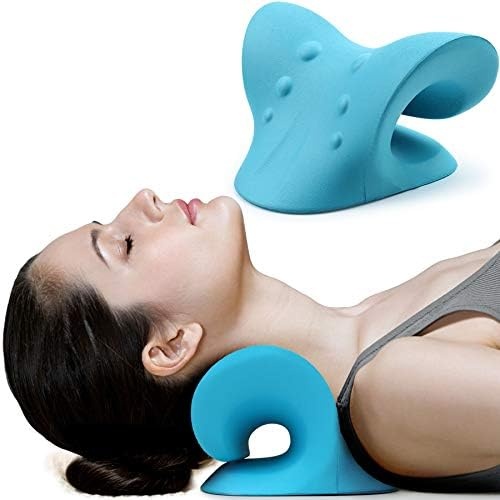
RESTCLOUD Neck and Shoulder Relaxer, Cervical Traction Device (Blue)
A short neck reset that helps on mornings when the pillow lost the fight
It is not a sleeping pillow, and it is not a substitute for medical care
Prices and availability were captured from Amazon Creators API and may change.
How I judge a pillow before it earns a spot on my bed
Every pillow that comes into this house gets the same treatment, and it takes at least two weeks. One night tells you nothing except how the pillow smells out of the bag, and vacuum sealed pillows smell like the bag for a day or two no matter what the listing promises.
I check loft first, because it is the number that actually matters for a side sleeper. The pillow has to be tall enough to fill the space between the side of your head and the mattress while your shoulder stays stacked under it. If your head tips down toward the mattress, the pillow is too low and your neck spends eight hours bending the wrong way. If your chin pushes up, it is too high.
Second, I press on the fill and check the weight. Cheap pillows feel like they are half empty, and they are. A pillow with real heft holds its shape when you fold it in half and let go.
Third, the 2 a.m. cooling check, because I sleep warm and I am the test. A "cooling" cover on a hot fill is the most common lie in bedding. Fourth, a wash. I want to know whether the stitching survives and whether the fill clumps, because a pillow you cannot wash is a pillow with a short life. Finally I amortize it. A pillow that costs more but holds its loft for five years is the cheaper pillow, and I will argue that with anyone.
The adjustable memory foam set: the most flexible pick
The queen size set of two from this listing is built around a dual fill design, which means the manufacturer is admitting something the rest of the category hides: one loft does not fit every body. Adjustable pillows let you pull fill out until your neck stops complaining, and I have cut open cheaper "adjustable" pillows that were half empty by month six, so the fill weight matters more than the marketing.
The washable cover is the part I care about most. A memory foam pillow you cannot wash is a pillow that lives on borrowed time, especially in a house with a CPAP machine and a white noise air filter running all night.
Here is my honest criticism of this style in general. Cooling claims on memory foam are usually about the cover, and the cover is a thin layer between your face and a dense foam core. If you sleep warm, plan on the cover helping at 1 a.m. and not helping at 4 a.m. That is not a dealbreaker. It is just a reason to buy it for the adjustability and the washable cover, not for the word cooling.
The Piwaal down alternative set: the value pick
The Piwaal set is a two pack of standard size pillows with down alternative filling, and the listing specifically says they are for back, stomach, and side sleepers. I want to flag that sentence, because most pillow listings quietly admit they only work in one position and hope you do not notice. A down alternative that is honest about serving all three positions is at least aiming at the right target.
Down alternative is the category I recommend to almost everyone who does not want to spend pure down money. The good ones have a soft casing, no chemical odor after a day of airing, and stitching that does not open up on the first wash. The bad ones are "hotel quality" printed on a pillow that is very soft and thin, which is a phrase I have grown to distrust on sight.
So the test here is not the word luxury in the name. It is the casing, the stitching, and how the fill behaves after a wash cycle. If those hold up, a down alternative set at this kind of price is the easiest pillow purchase to amortize, because you get two pillows and a guest room that finally stops embarrassing you. Tom noticed the weight and loft of our last down alternative set on the very first night, and that is the kind of thing a side sleeper notices immediately.
The Oubonun full body pillow: the shoulder pain answer
A body pillow is not a head pillow, and I wish more people understood that before they bought one and complained it was too big. The Oubonun is a long, adjustable, firm body pillow built for side sleepers, and the job it does is different. It supports the shoulder and the hip at the same time so your top arm has somewhere to land instead of folding across your chest all night.
For a side sleeper with shoulder pressure, that is the fix that a standard pillow cannot deliver. The adjustable firmness matters too, because a body pillow that is too firm pushes your top shoulder up and out of alignment, and one that is too soft does nothing at all.
The trade-off is space. This thing takes up a serious share of a queen bed, and if your partner is a sprawler, you will have opinions about that by week one. It is also not a replacement for your head pillow. If you are buying one pillow this month and you sleep on your side with neck pain, buy the head pillow first and the body pillow second.
The RESTCLOUD neck relaxer: the ten minute tool
The RESTCLOUD is a cervical traction device, a neck stretcher shaped to support the curve of the neck, and it is blue and unmistakably not a bed pillow. People buy it for neck and shoulder tension, jaw tightness, and the general feeling that your head is sitting too far forward after a long day.
I am not going to give you medical advice, because that is not my job and I am not qualified. What I will say is that a device like this belongs in the same category as a foam roller: you use it for a short session, not for eight hours of sleep. Used as a sleeping pillow it would be miserable, and the listing does not pretend otherwise.
Where it earns its place in this comparison is the CPAP corner of the conversation. When head and neck support is off, everything downstream is off, and a short reset before bed is a reasonable part of a routine that includes a proper pillow, not a replacement for one. If you have actual neck pain that does not resolve, that is a conversation for a clinician, not for a pillow review.
The trade-offs nobody puts in the bullet points
Adjustable memory foam gives you the most control and the least certainty. You will spend the first week pulling fill out and stuffing it back in, and if you are impatient, like me, you will sleep on the wrong loft for two nights and blame the pillow.
Down alternative gives you the best value per pillow and the shortest lifespan if the fill migrates. Check the loft at month three and again at month twelve. A pillow that has lost a third of its height by month twelve was never a bargain, no matter what it cost.
A body pillow solves a specific problem and creates a specific problem, which is bed space. And a traction device solves nothing about your sleep position. It is a tool you use before bed, and it does not replace the pillow your head spends the night on.
The one thing all four have in common: none of them will tell you what they feel like after two weeks. That is on you to log. I keep a notebook by the bed and write down the position, the neck score, and whether I woke up hot. It sounds excessive. It is also the only reason I stopped returning pillows.
Who should buy which
If you sleep on your side and you want one purchase that adapts as you figure out your loft, buy the adjustable memory foam set. If you want two decent pillows for a guest room or a spare bed without spending real money, buy the Piwaal down alternative set. If your shoulder is the problem and your neck is fine, buy the body pillow and accept the bed space it eats. If your neck is tight and you want a short daily reset alongside a proper pillow, the RESTCLOUD is the tool, not the answer.
If you are a stomach sleeper, be careful with all of them. Stomach sleeping wants a very low loft, and the fastest way to wake up with a stiff neck is to put a tall pillow under a face that is turned to the side all night.
What I am watching next
I am still logging loft at month three and month twelve on everything in this house, because the pillow that survives a year is the only pillow worth recommending twice. I am also watching how these covers hold up after five or six washes, since a washable cover is only a feature if it is still a cover afterward.
Buy the pillow that fits your position, amortize it over five years, and write down how you slept. That logbook has saved me more money than any review, including this one.