Related: Pillow Loft by Sleep Position: A Simple Chart
I have bought and returned more pillows than I can count. A memory foam pillow was my benchmark for over 20 years, and every replacement I ordered came back too hard, too soft, or too expensive. Retirement means watching the budget, so this year I stopped guessing and started logging. Four picks, 30 nights, side and back and stomach positions, neck pain scored every morning, plus a warm-sleeper check at 2 a.m.
This is a guide to pillows for side and back sleepers, along with the two pieces of gear that solved the guest room and the tent at the same time. Nothing here made the list because the packaging looked nice. Each one survived two weeks of real nights in all three positions before I wrote a word about it.
If you take one thing from this, take the math: a pillow is a five-year purchase, not a $30 impulse. Amortize it and the whole budget argument changes.
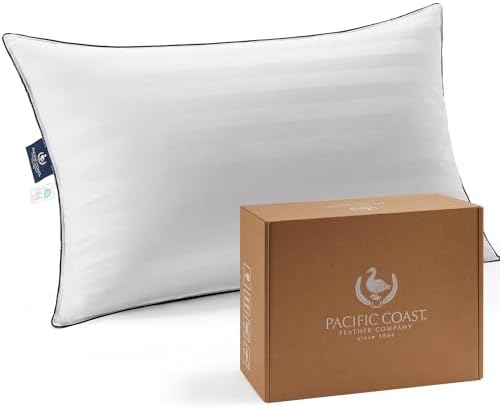
Best Overall: Pacific Coast White Goose Down Pillow
Tom and I spent $300 each on pure down pillows years ago and adored them, and this is the closest thing I have found to that gold standard since. It is heavy in the hand, plush when it plumps, and it envelopes your head the way real down does instead of propping it up on a shelf.
In the back position it cradled my neck without pushing my chin toward my chest. In the stomach position it stayed low enough that my head did not crank back, which is the failure I see in most fluffy pillows. Tom, a lifelong side sleeper, found it too low for him unless he folded it, and that is worth saying out loud. Down at this loft is not a side-sleeper pillow.
The fill is certified by RDS and Oeko, which matters if you care where it comes from, and the casing survived a wash without spitting feathers or going lumpy. I do not trust the phrase "hotel quality," but the stitching and the fill here earned it. It is the expensive pick. Amortize it over five years and it stops looking expensive.
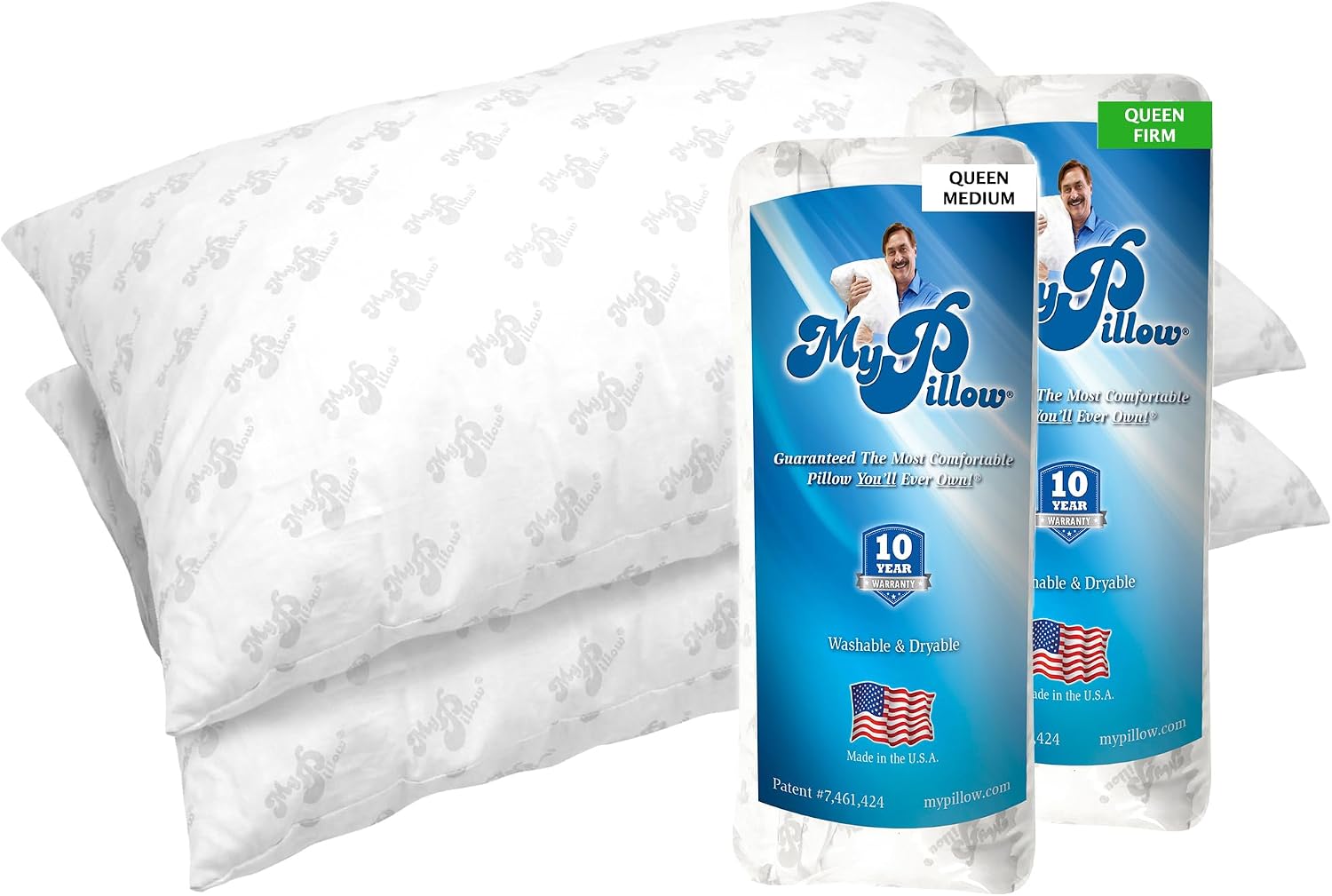
Best for All Three Positions: MyPillow Classic Pillow, Set of 2
This is the set I recommend to anyone who wants one pillow that works everywhere. The fill is meant to be pushed around, so you can move it from the back position to the side position to the stomach position and reshape it with your hands before you lie down. For a house where Tom sleeps on his side, I sleep on my back, and the guest bed gets stomach sleepers, that flexibility is worth more than single-position perfection.
The queen set of two is the practical part. It means the guest room gets a matching pillow instead of the sad spare from the closet.
What I will tell you honestly is that the shape does not stay where you put it all night. By 2 a.m. I was pushing fill back under my neck more often than I wanted. The loft is also modest out of the box, and these arrive vacuum sealed like almost everything now, so give them two days to plump before you judge them. I did not give mine two days. I slept on the flat version the first night anyway, and I regretted it.
Side sleepers who need real height should use the fold-and-push trick or buy something taller. Everyone else, this is the set that adapts.
Best Budget and Travel Pick: Cooling Cervical Camping Pillow
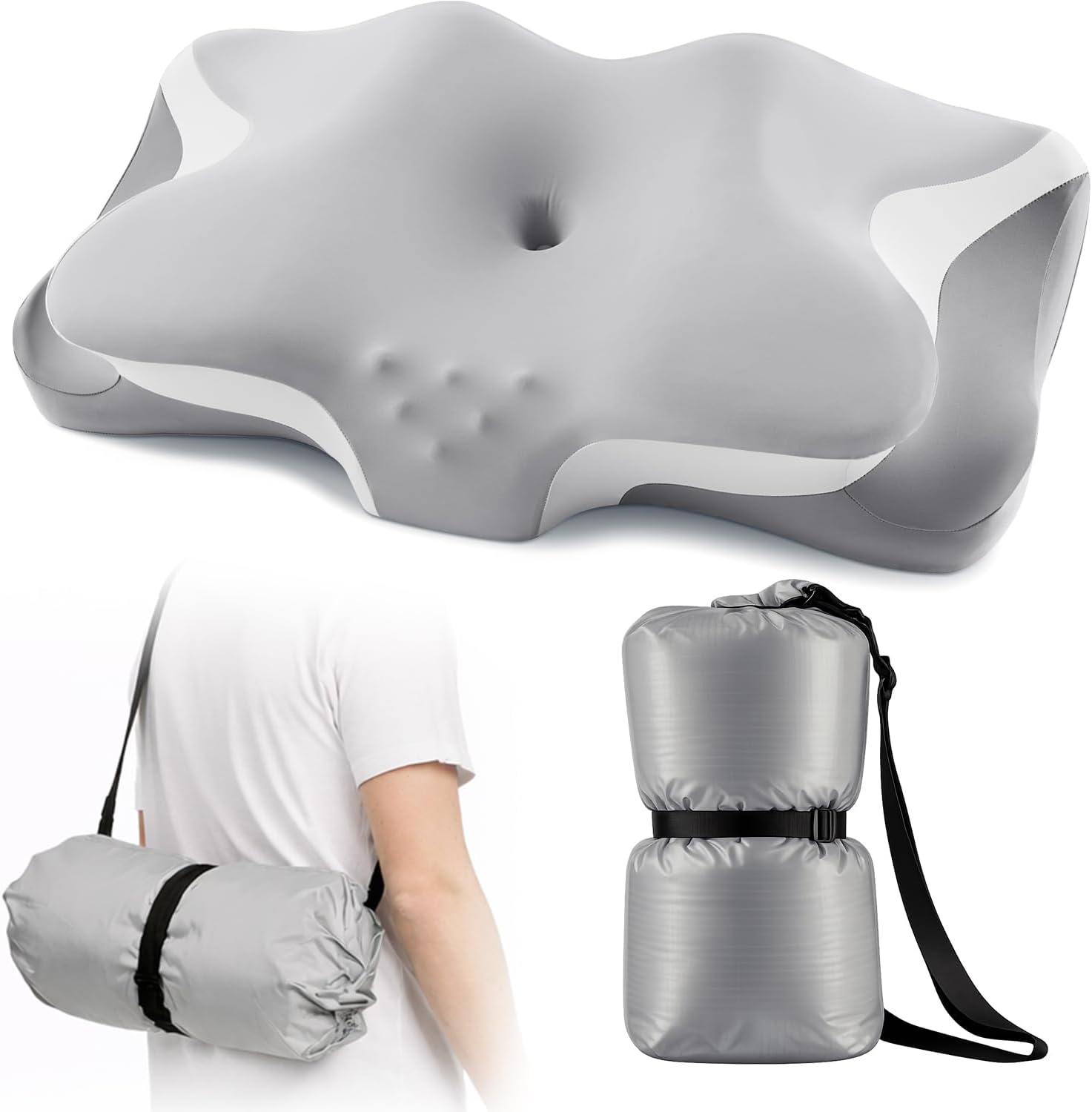
The honest reason this one is here: it costs a fraction of the down pillow, it comes with a hand-rolled vacuum bag, and it fixed the guest room for the family member who cannot sleep on down. It is memory foam with a cervical shape, sold for indoor and outdoor use, and it is sized like a travel pillow, so do not expect a queen footprint.
The cervical curve is the point. On my back, the dip caught my neck and kept my head from rolling to one side, which is the same support I want when the CPAP mask is on. Side sleepers will find it thin unless they double it with something else, and stomach sleepers should keep it flat side up.
Cooling is the most lied-about word in bedding, so here is my test. The cover sleeps cooler than a plain foam pillow, and I made it through a warm Austin night without flipping it at 2 a.m. It will not chill you. It just does not cook you.
The vacuum bag is genuinely useful. Roll it down and it disappears into a carry-on or a tent bag.
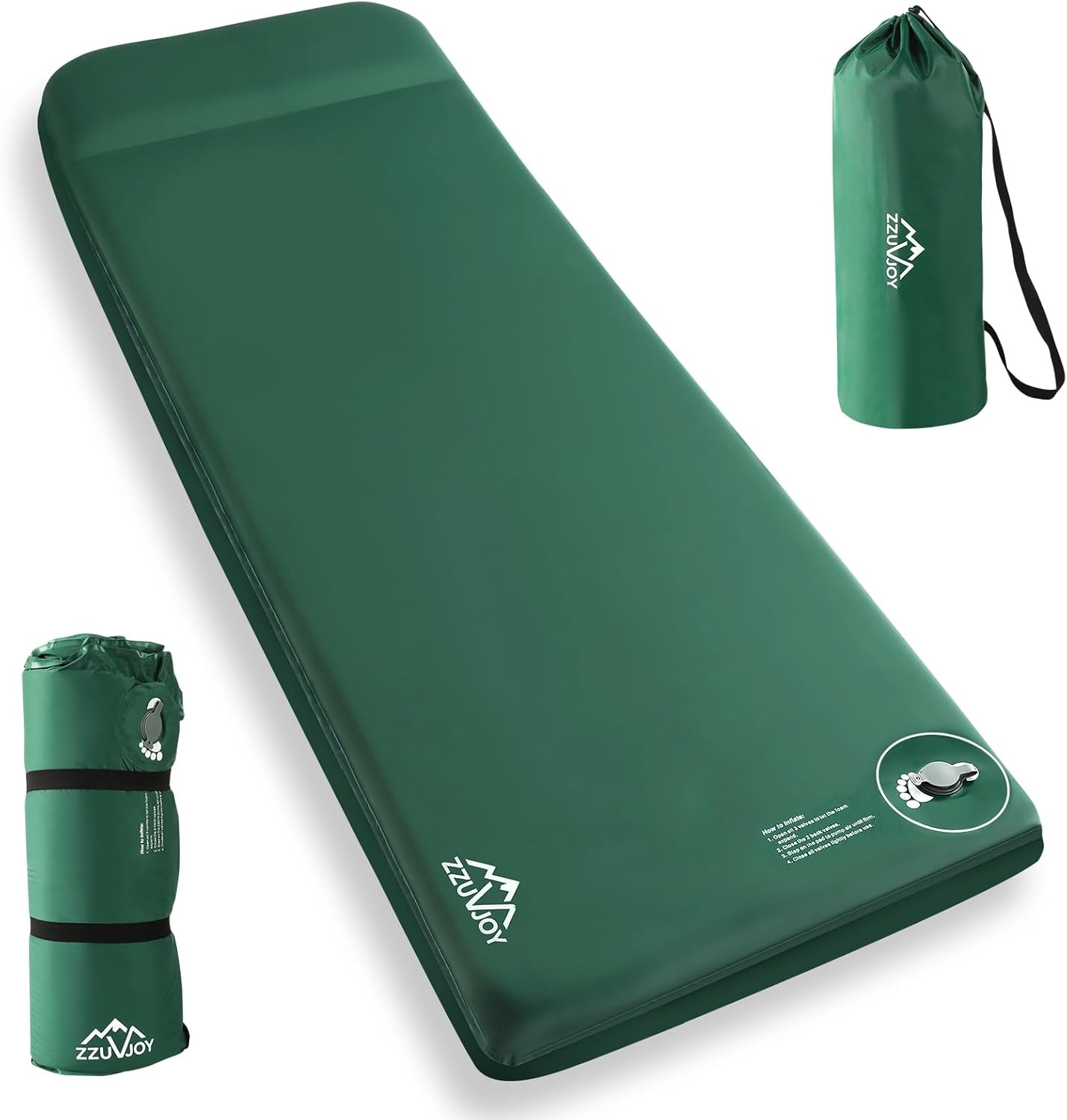
Best Base Layer for Camping: 3.1-Inch Memory Sleeping Pad
This is not a pillow, and I am including it anyway, because the fastest way to ruin a good pillow is to put it on a bad surface. This is a 3.1-inch ultra-thick foam mat with a 9.5 R-value and an integrated pillow, and it is the piece of gear that makes a tent night feel like a bed night.
A 9.5 R-value is a serious insulation number for a self-inflating pad, and it is why this one is on my list for car travel and cold-weather trips rather than summer camping only. The foam thickness means you are not sleeping on every rock through half an inch of padding. The built-in pillow is modest, but it is enough that you do not need to pack a second one for a weekend.
It is heavier and bulkier than an air pad, so backpackers should keep walking. For car camping, a guest floor, or a kid's room, the trade is worth it. Pair it with the camping pillow above and you have a sleep setup that travels.
How I tested
I ran every pillow through the same rotation for at least two weeks, and the down pillow for a full month, because down changes with the weather. I slept on each one in all three positions: on my back, on my side like Tom, and on my stomach the way the guest bed gets used.
Every morning I wrote down three things: neck pain on a 1 to 10 scale, how many times I woke up, and whether I had to push fill back into place overnight. I did not trust my memory on any of it. A pillow that feels fine at 11 p.m. and terrible at 3 a.m. is a bad pillow, and the only way to catch that is to write it down.
The cooling check is mine to make because I sleep warm. At 2 a.m. I noted whether my head and neck were damp, whether the pillow felt warm to the touch, and whether I had flipped it. A cover that says cooling means nothing to me until I have slept on it on a Texas night.
I also checked loft at the start and again at two weeks, and I pressed each pillow flat with my forearm to see how fast it came back. Fill that migrates to one corner and leaves a flat spot under your neck is the most common failure I find, and it shows up in week two, not on the first night.
Analysis and test results
The pattern across all four was simple. Down and memory foam behave completely differently, and the right pillow depends on your sleep position and how warm you run.
The Pacific Coast down pillow had the best initial feel of anything I have tested since our old $300 pillows. It is heavy and plush and it envelopes your head. It also ran warm for me by the end of a long night, and it is the least supportive in the side position. Down compresses. That is what down does.
The MyPillow set was the most adaptable and the least stable. Being able to push the fill around is real, and it is why it works in all three positions. It is also the pillow I was re-fluffing most at 2 a.m. If you want a pillow that stays exactly where you put it, this is not that pillow. If you want one set that handles a household of different sleepers, it is.
The camping pillow surprised me. The cervical dip is the feature that matters, and the cover genuinely sleeps cooler than plain memory foam. Its limitation is size, not quality.
The sleeping pad is the quiet winner for anyone who camps or hosts. A 3.1-inch foam surface with a 9.5 R-value and a built-in pillow is a different category of comfortable than a thin air mat, and it costs less than the down pillow.
On firmness claims: ignore them. "Firm" has burned me more than once. Press the pillow with your forearm, check the fill weight if the listing gives it, and read the most recent reviews instead of the top ones. That is the only firmness test that has held up for me.
The pillow reference table
This is the table I keep in my phone when I am standing in a store or scrolling at midnight. Positions are the ones I actually slept in, and the warm-sleeper column is my own 2 a.m. check. Prices move, which is why the last column says what it says, and why I keep coming back to cost per year instead of the sticker on the day you buy.
| Pillow | Best sleep position | Fill | What I noticed | Warm-sleeper check | Price |
|---|---|---|---|---|---|
 Visit on Amazon → Pacific Coast White Goose Down Pillow |
Back and stomach | White goose down, RDS and Oeko certified | Heaviest and plushest; envelopes your head; too low for side sleeping | Ran warm by morning | Check current Amazon price |
 Visit on Amazon → MyPillow Classic Pillow, Set of 2 |
All three, with reshaping | Pushable, adjustable fill | Most adaptable; fill migrates and needs re-fluffing; arrives vacuum sealed | Slept neutral | $54.98 |
 Visit on Amazon → Cooling Cervical Camping Pillow |
Back, travel, and guest bed | Memory foam with a cervical curve | Cooling cover holds up; cervical dip supports the neck; travel sized | Slept cooler than plain foam | Check current Amazon price |
 Visit on Amazon → 3.1-Inch Memory Sleeping Pad with Pillow |
Tent, car, guest floor | Memory foam, 9.5 R-value, self inflating | Not a pillow, but it makes any pillow work; heavy for backpacking | Neutral and insulated | $57.99 |
The flip side of the table is the washing question. A pillow only survives five years if you can wash it, and the down pillow and the camping pillow both came out of a wash looking like themselves. That matters more than any firmness claim on a box.
Should you buy the Pacific Coast White Goose Down Pillow?
Yes, if you sleep on your back or your stomach and you want the closest thing to a hotel down pillow at home. It is the gold standard I measure everything else against, and the fill and casing are certified. It is also the most expensive pick here, and it ran warm on me, so side sleepers and hot sleepers should keep reading.
Should you buy the MyPillow Classic Pillow set?
Yes, if your household has different sleepers and you want one pillow that handles all three positions with a bit of reshaping. The set of two covers the guest room too. Give it two days to plump after it arrives, and expect to push the fill back under your neck in the middle of the night.
Should you buy the cooling cervical camping pillow?
Yes, if you travel, camp, or need a small pillow for a guest who cannot sleep on down. The cervical curve is real support, and the cooling cover is one of the few I have tested that does not cook me. It is travel sized, so treat it as a second pillow, not a primary one.
Should you buy the memory sleeping pad?
Yes, if you camp from a car, sleep on a guest floor, or want a spare bed that stores in a closet. The 3.1-inch foam and 9.5 R-value make it a real sleeping surface rather than a pool float. Backpackers should skip it, because it is heavy.
Whatever you choose, give it two weeks and a logbook. A pillow you have not slept on in all three positions is still a guess, no matter how good the reviews looked at midnight.