Shredded memory foam pillows arrive vacuum sealed, flat as a pancake, and most people judge them in that state. That is the first mistake, and it is why so many of them get returned in week one. The fill needs time to plump, and then it needs tuning, because a shredded foam pillow is the only pillow you can actually adjust to your own neck instead of hoping the factory guessed right.
I have spent the better part of 15 years chasing a pillow that would not wreck my neck, and I have returned more Amazon orders than I care to count. What finally changed the math for me was realizing that shredded fill is a starting point, not a finished product. You open the zipper, you move some foam around, and you sleep on it again. Two weeks of that beats any firmness claim on a box.
This guide is the routine I use: how to break the pillow in properly, how to set the loft for side, back, and stomach sleeping, how to tell whether a cooling cover is doing anything at 2 a.m., and how to wash the thing without ruining it. The two pillows below are the ones I would hand a first time buyer, one for the budget and one for the warm sleeper.
Why you should trust me
I am a retired middle school teacher in Austin, Texas. I sleep with a CPAP machine, blackout blinds, an air filter for white noise, and an adjustable bed, so I am not casual about any of this. My husband Tom is a lifelong side sleeper, I am a back sleeper, and our guest bed gets stomach sleepers, which means every pillow in this house gets tested in all three positions before I form an opinion.
I keep a night by night log: neck pain scored 1 to 10, how many times I flipped, and whether I woke up hot at 2 a.m. I have the receipts for every pillow I have ever bought, including the $300 down pillows Tom and I adored and the influencer down alternative I hate to admit I bought on a whim. I also have a firm rule that keeps me honest: nothing gets recommended here without two weeks of real nights behind it, and no cooling claim gets repeated without me being the warm sleeper who tests it.
One boundary up front. I will tell you what supported my neck and worked around my CPAP mask. I will not diagnose your neck or your sleep apnea. That is a conversation for your doctor.
How I judge a shredded memory foam pillow
Shredded fill is different from a solid foam block in one important way. Solid foam is whatever firmness it is, and you live with it. Shredded foam is a bag of small foam pieces inside a casing, which means the loft and the feel depend on how much fill is in there and how you distribute it. That adjustability is the whole value proposition.
Four things decide whether a shredded pillow is worth your money.
What is actually inside. Fill weight and fill type matter more than the word "firm" on the label. Press the pillow with both palms. If it collapses to nothing, the casing is doing the work and the fill is thin. If it pushes back and holds a shape, there is real material in there. Medium firm is a marketing phrase until you have pressed it yourself, and I have had plenty of pillows arrive described as firm that were soft and thin.
Loft through the night, not at bedtime. The test is whether the pillow is still tall enough at 3 a.m. to fill the gap between your ear and your shoulder. Fill migrates. A pillow that starts lofty and ends up with a flat spot under your neck failed, no matter how good it felt when you lay down.
Cooling, honestly tested. Shredded foam breathes better than a solid foam block because air moves between the pieces. That is a real advantage. It does not mean the cooling cover on top is doing anything. I sleep warm, so I am the test.
How long before it goes flat, and what that costs per year. A pillow is a five year purchase, not a $30 impulse. Divide the cost by the years it lasts and the math changes completely. A pillow that holds its loft for five years is cheaper than three cheap ones that die in eighteen months.
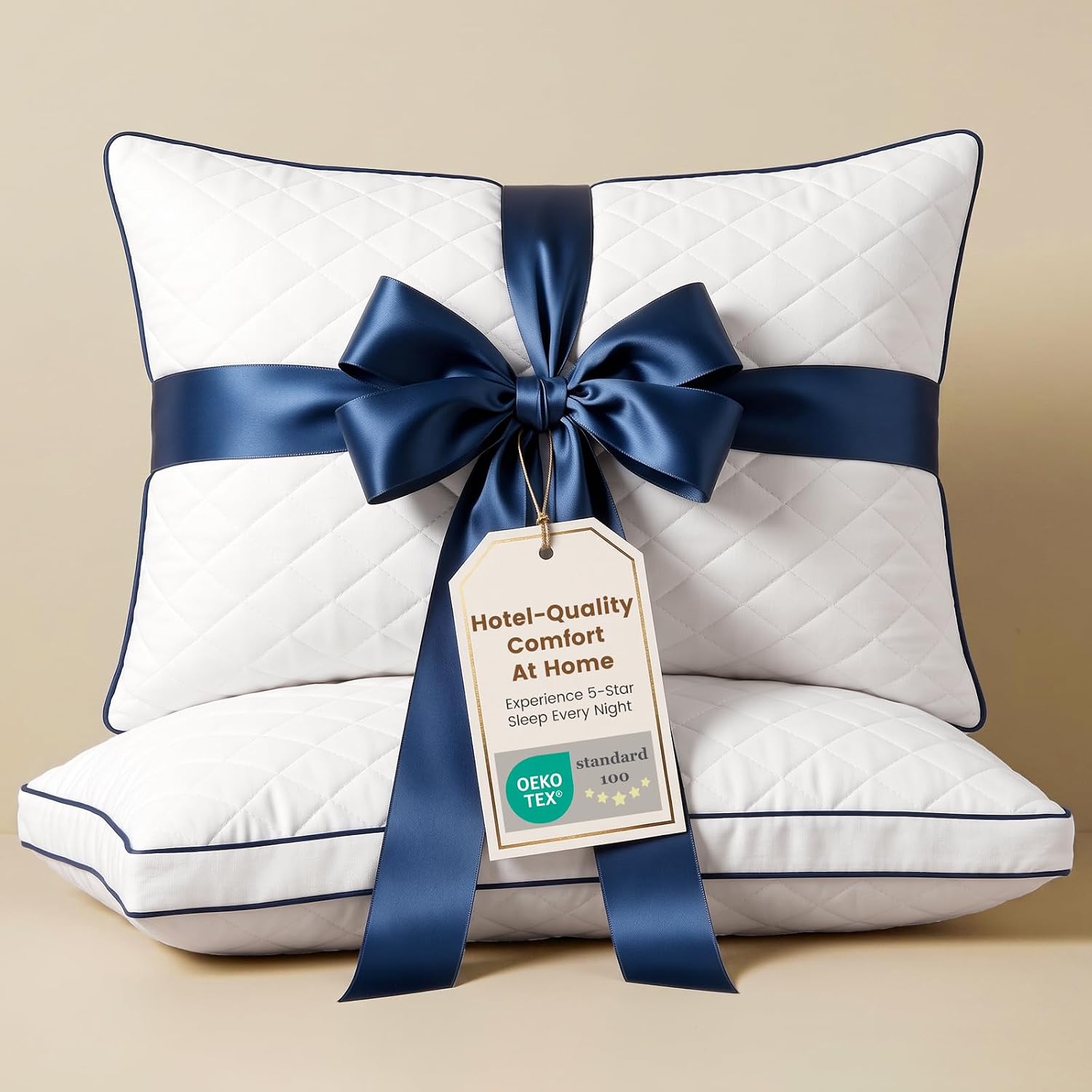
Best budget pick: DOWNSTORIA Shredded Memory Foam Pillows Standard Size Set of 2, Medium Firm Bed Pillow for Sleeping, Soft Memory Foam Pillows 2 Pack for Side and Back Sleepers with Gusset(20"x26")
 Visit on Amazon →
This is the set I point people to when they want to try shredded fill without committing much money, and when they want two pillows rather than one. It is a standard size two pack, 20 by 26 inches, with a gusset, which matters because a gusset is what gives a pillow a side wall and keeps the loft from collapsing the moment your head lands on it. The listing calls it medium firm and names side and back sleepers, and that tracks with how shredded fill behaves once you have it dialed in: enough height for a side sleeper's shoulder gap, not so much that a back sleeper's chin gets pushed up.
The practical advantage of a two pack at this price is that you can run an experiment. Leave one pillow full and take a few handfuls of fill out of the other, then sleep a week on each. You will learn more about your own neck in seven nights than you will from a year of reading reviews. Standard size is the tradeoff to know about: if you are tall or you roll around a lot, a queen footprint gives you more room to land, and that is what the second pillow below is for.
Flaws but not dealbreakers: Standard size means less real estate, and the gusset only helps if the fill is distributed evenly. Knead it corner to corner before the first night and again after the first week.
Anyone furnishing a guest room, or trying shredded foam for the first time on a budget, should start here.
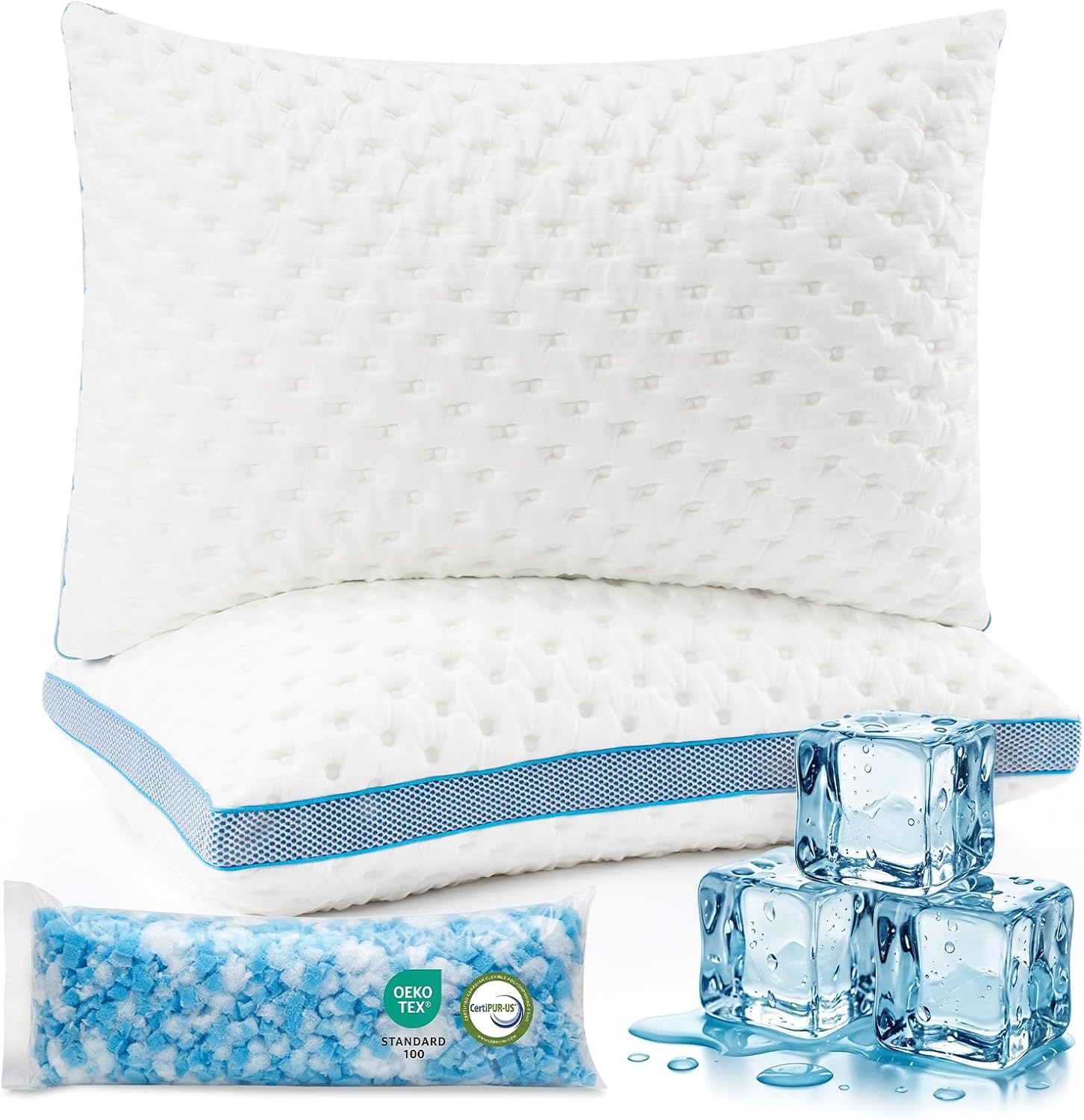
Best for warm sleepers: Resort Collection Cooling Shredded Foam Bed Pillows Queen Size Set of 2
 Visit on Amazon →
This is the queen size two pack, and the word to pay attention to in the name is cooling, because that is the most lied about claim in bedding. Here is how I handle it. A cooling cover can help, and a shredded fill does sleep cooler than a solid foam block because air moves through the gaps. But the cover is only half the story, and the fill is what is against your head at 2 a.m. So I test it the way I test everything: sleep warm, no fan pointed at my face, and see whether I wake up at 2 a.m. with a hot pillow.
The queen footprint is the reason to step up here. More surface area means you can shift positions without your head sliding off the edge, and it gives a side sleeper room to pull fill forward into the neck gap. It is still shredded fill, which means it is adjustable the same way: unzip, remove or add, and re-test. Set your expectations honestly and this is a reasonable pillow for a warm sleeper who wants a queen set for the main bed.
Flaws but not dealbreakers: Cooling is a claim, not a guarantee. Give it a full two weeks of warm nights before you decide, and if the fill still runs hot for you, no cover was going to fix that.
Anyone who sleeps warm, wants a queen set, and is willing to spend two weeks tuning the loft should look here first.
The break in routine, step by step
This is the part people skip, and it is the reason shredded pillows get a bad reputation in week one.
Step one: give it 48 hours. Take the pillow out of the vacuum bag and lay it flat on the bed. Vacuum sealing crushes the fill into a brick, and the foam needs time to relax. Two days gets you maximum plumping. I will admit I have zero patience and slept on the flat version the first night anyway, and it was noticeably better by night three.
Step two: break up the clumps. Reach into the casing and separate the foam by hand, corner to corner. Shredded foam ships compressed into clumps, and a clumped pillow feels lumpy and hard in exactly the wrong places.
Step three: shake and press. Hold the pillow by two corners and shake it, then press down with both palms and let it spring back. Repeat a few times. This redistributes the fill evenly and gets air into it.
Step four: sleep on it as it comes. Do not adjust anything on night one. You need a baseline before you start changing things.
Step five: add or remove fill. Most shredded pillows have an inner liner you can open, and this is the step that turns a generic pillow into your pillow. Side sleepers usually add fill. Back sleepers usually leave it. Stomach sleepers take a lot out. Store the extra fill in a zip bag, because you will want it back in a year when the pillow settles.
Step six: wash the cover, not the fill. Shredded memory foam does not belong in a washing machine. The fill will clump and never fully recover. Zip the outer cover off and wash that. Spot clean the inner liner, air it out, and let everything dry completely before it goes back on the bed.
Setting the loft for your sleep position
Side, back, and stomach are three different pillows. If a pillow only works in one position, that is worth saying out loud.
Side sleepers. You need the most loft, because the pillow has to fill the distance from your ear to the outside of your shoulder. If your head tips downhill toward the mattress, you are underfilled. Add fill until your head sits level with your spine and your neck is not bending sideways. This is the position where a gusseted, well filled pillow earns its keep, and it is the reason Tom notices loft before he notices anything else about a pillow.
Back sleepers. You want the fill to cradle the curve at the base of your neck without pushing your chin toward your chest. If your chin is up, the pillow is too tall, so take some fill out. If your head rolls to one side all night, it is too flat, so add a little.
Stomach sleepers. This is the position that gets ignored, and the guest bed is where I get asked about it. Stomach sleeping wants almost no loft, so you are looking at a thin pillow or a heavily emptied one. A tall pillow here bends the neck backward for hours.
CPAP users. I use a mask, so I will say only what worked for me: the pillow needs to support the head and neck without pushing the mask sideways, and a shredded pillow lets you carve out a little hollow where the mask sits. That is a fit and comfort note, not medical advice.
Cooling, and what actually happens at 2 a.m.
The honest version: shredded fill sleeps cooler than a solid block because air moves between the pieces, and no cover on earth fixes a pillow whose fill traps heat. A cooling cover can feel cool for the first twenty minutes, which is exactly long enough for a showroom and not long enough for a night.
My test is simple. Sleep warm, no fan aimed at your head, and note whether you wake up hot. If you do, the fill is the problem, not the cover. This is also why I am skeptical of hotel quality and cooling printed on the same tag.
The pillows I stopped recommending and why
Solid memory foam was my benchmark for over 20 years. Nothing beats that initial sink. But the price went up, the pillow eventually flattened, and I returned every replacement I ordered. If you want a block of foam, buy the real thing and amortize it. Just know it is not adjustable.
Down alternative is a great choice for a lot of people. The Beckham Hotel Collection set is the best reasonably priced one I have tested: soft casing, no chemical odor, and stitching that survives a wash. It started in our guest room and ended up on our bed. It is also not adjustable, and a down pillow is either the right loft or it is not.
Buckwheat is another level of support altogether. The heft tells you it is actually full, and it holds a shape better than anything else I have owned. It is also noisy, the hulls compress over about five years, and the crunching is not for everyone, which is why the guest room keeps a shredded foam set instead.
And the $5 Walmart pillow is the reason a lot of people think they hate pillows. It is flat by week two.
What this all costs
Both pillows here are two packs, which is the detail that matters for the math. One goes on your bed, one goes on the guest bed, or you run the fill experiment I described and keep the loser as a spare. Check current Amazon price on each before you decide, then divide by the years you expect to keep it. A pillow that holds its loft for five years is a very different purchase than a cheap one you replace twice in that window.
The work is the cheap part. Forty eight hours of plumping, a week of sleeping on it as it comes, then two or three rounds of adding or removing fill. That is maybe twenty minutes of actual effort spread over two weeks.
Do that once and you stop shopping. You stop returning. You stop wondering whether the pillow you bought is the pillow you needed, because you made it into that pillow yourself. That is the whole reason to buy shredded fill in the first place.