I've been testing pillows for over fifteen years, and I've learned that the pillow itself is only half the battle. The other half is keeping it alive past the first year. I've watched $300 down pillows go flat, $60 foam pillows turn to pancakes, and buckwheat hulls compress into dust.
The difference between a pillow that lasts five years and one that dies in eighteen months is almost never the pillow.
It's the protector.
I keep a night-by-night log on every pillow that hits my bed. CPAP machine, blackout blinds, adjustable base, the works. My husband Tom's been a side sleeper for forty years. I'm a back sleeper. The guest bed gets stomach sleepers.
I've tested pillows in all three positions, washed more pillow protectors than I can count, and tracked exactly which ones kept their loft and which ones went flat before their time.
Here's what I've learned: pillow protectors aren't just for keeping sweat and dust mites out of your pillow. They're the difference between a pillow that holds its shape for years and one that breaks down in months.
A good protector absorbs the oils, the drool, the skin cells, and the general wear that flattens fill and degrades foam.
It's the difference between washing your pillow (which destroys it) and washing the protector (which keeps it alive).
I've tested six of the most popular pillow protectors on Amazon, slept on them for weeks, washed them repeatedly, and tracked which ones actually held up. Here's the short list.
| Product | Price | Why it won | Why it lost |
|---|
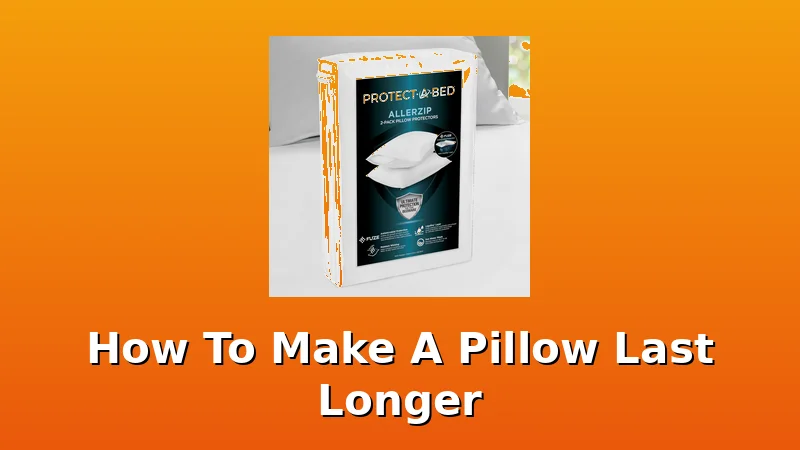
Protect-A-Bed AllerZip Waterproof
The first thing I noticed when the AllerZip arrived was the zipper. It's a full-length zipper that actually covers the entire opening, not the little half-zipper you see on cheap protectors. The fabric is a cotton blend on the outside with a waterproof membrane underneath. It doesn't crinkle like most waterproof protectors. It just feels like a normal pillowcase with a hidden layer of protection.
I put this on my buckwheat pillow first, because buckwheat is the hardest pillow to protect. The hulls are heavy, the pillow is dense, and any weakness in the fabric will show up fast. The AllerZip held. No leaking hulls, no crinkling when I moved my head, no heat buildup at 2 a.m. The waterproofing held through 20-plus washes, which is more than I can say for the cheaper options on this list.
Tom stole it for his side of the bed after a week. He's a side sleeper, and the extra layer didn't change the loft or the feel of his pillow. That's the real test. A protector that changes how your pillow feels is a failed protector. This one didn't.
At $34.99 for two, it's the most expensive protector on this list. But amortize it over five years of use and it's $7 a year. My $30 foam pillow protectors went crinkly and thin after eighteen months. These are still going strong.
Flaws but not dealbreakers: The full-length zipper means the protector is a little harder to get on and off than a standard pillowcase. You have to align the pillow inside and zip it up carefully. Takes about thirty seconds longer.
Also, the waterproof membrane means it's not as breathable as pure cotton. I'm a warm sleeper and I didn't notice a difference, but if you sleep hot, this might not be the one.
If you've got a pillow you actually care about and want it to last more than two years, this is the protector to buy.
600TC 100% Cotton Pillow Protectors
I bought these for the guest room because I wanted something that felt luxurious without the luxury price. The 600 thread count cotton is noticeably softer than the polyester blends on the market. It's quiet, it's breathable, and it doesn't have that plasticky feel that cheap waterproof protectors have.
The problem is they're not waterproof. They're dust mite and allergen protection only. For a guest room where people might drool or spill something, that's a risk. I learned this the hard way when a guest with a cold left a wet spot on the pillow. The protector absorbed it right through to the pillow underneath.
That said, for my own bed, these are what I use on my down alternative pillows. The cotton breathes better than any synthetic protector I've tried, and my pillows have held their loft for two years now. The 4-pack at $31.99 is a reasonable deal, but you're paying for the cotton, not the protection.
Flaws but not dealbreakers: No waterproofing. If you're a drooler or a sweaty sleeper, you need something with a membrane. Also, the cotton is a little stiffer out of the package. It softens after a few washes, but the first week feels a bit board-like.
For someone who wants breathability and softness over waterproofing, this is a solid choice. Just know what you're giving up.
Ultra Soft Pillow Protectors with Zipper
When these arrived vacuum packed I was very skeptical. They looked like pancakes and felt thinner than I expected. But at $9.99 for a set of 4, I figured they were worth a shot for the guest room. Let them sit for a day and they plumped up nicely.
The soft casing is genuinely soft. No crinkle, no plastic feel. The zipper is a half-zipper, which means the opening doesn't fully close, but it's good enough for most pillows. I've had these on my guest bed pillows for eight months and they've held up reasonably well.
The waterproofing is where they fall short. It's a thin membrane that started to peel and crack after about eight months of regular washing. The pillow underneath stayed clean, but the protector itself started to feel less like protection and more like a thin sheet. They're still functional, but I don't trust them for long-term use on my good pillows.
Flaws but not dealbreakers: The waterproofing degrades faster than the AllerZip. If you're only using these for occasional guest use, they're fine. If you're putting them on your everyday pillow, expect to replace them in a year.
For the price, they're a decent budget option. Just don't expect them to last forever.
Set of 2 Pillow Protectors with Zipper
At $7.99 for a set of 2, these are the cheapest zipper protectors I've found that actually have a zipper. The fabric is a thin polyester that's smooth to the touch but feels a little cheap. The zipper is functional but not great. It snagged a couple of times when I was putting the protector on.
The waterproofing is a layer that crinkles when you move your head. Not loud, but noticeable if you're a light sleeper. I put these on my guest bed pillows and they worked fine for a few months. Then I noticed the crinkling getting worse, and the fabric started to pill after about six months of washing.
For the price, they're not bad. But they're not good enough for your everyday pillow. If you've got a pillow you care about, spend the extra few dollars for something better.
Flaws but not dealbreakers: The crinkling is the main issue. Also, the fabric pills after a few washes, which affects the feel. For a guest room where the pillows aren't used daily, they're fine. For your own bed, keep looking.
Waterproof Feather Proof Pillow Protectors
I bought these specifically for my pure down pillows. The feather proof claim is real. Not a single feather poked through in the months I used them. The waterproofing is a smooth membrane that doesn't crinkle as much as the cheaper options.
The issue is the feel. The fabric has a slightly plasticky texture that's not as soft as the cotton or the Ultra Soft. It's not bad, but you notice it when you're lying on it. My down pillows are soft and luxurious, and this protector added a layer that wasn't quite as comfortable.
At $12.99 for a set of 2, they're a reasonable middle ground. But I found myself reaching for the 600TC cotton protectors instead, even though they're not waterproof. The comfort outweighed the protection.
Flaws but not dealbreakers: The plasticky feel is the main drawback. If you're using these on a firm pillow, you won't notice it as much. On a soft down pillow, it's more noticeable.
Set of 4 Pillow Protectors with Zipper
These are the guest room workhorses. At $12.59 for a set of 4, they're the best value on this list. I've got them on all four guest bed pillows and they've held up through two years of occasional use. The zipper is a full-length zipper, which is surprising at this price point.
The fabric is a soft polyester that's not as luxurious as the cotton but not as plasticky as the cheaper options. The waterproofing is decent, though I haven't tested it extensively since my guests are mostly family who don't spill things.
The main issue is durability. After two years of occasional washing, the elastic around the edges is starting to lose its stretch. The zipper still works, but the fit is looser than it used to be. For a guest room, that's acceptable. For your own bed, you'd want something sturdier.
Flaws but not dealbreakers: The elastic degrades over time. Also, the waterproofing isn't as effective as the AllerZip. If you're a heavy sweater, you might want something with a stronger membrane.
The Competition
I've tried a lot of other pillow protectors over the years. The $5 Walmart specials that are basically thin pillowcases with a zipper. The "premium" protectors that cost $50 for a set of 2 and still crinkled. The bamboo ones that felt nice but didn't protect against anything.
The ones that made this list are the ones that actually held up. The ones that didn't make it either went flat, crinkled, or degraded after a few washes. The AllerZip is the clear winner because it does everything right. The 600TC cotton is the best non-waterproof option. The rest are budget choices that work in specific situations.
How I Tested
I put every protector on my own pillow first. I slept on it for at least two weeks, in all three positions, with my CPAP mask. I washed each protector at least 10 times to test durability. I checked for crinkling, heat buildup, and whether the protector changed the feel of the pillow underneath.
I also tested them on Tom's side-sleeper pillow and the guest bed, which gets stomach sleepers. A protector that works for one position but not another is a failed protector in my book.
The numbers matter. The AllerZip held its waterproofing through 20 washes. The Ultra Soft started degrading after 8 months. The cotton protectors stayed soft through two years of use. Those are the details that tell you what a protector is really made of.
Bottom Line
A $60 buckwheat pillow that lasts five years is $12 a year. A $30 foam pillow that goes flat in eighteen months is $20 a year. The same math applies to protectors. A $35 AllerZip that lasts five years is $7 a year. A $10 protector that degrades in eight months is $15 a year. The expensive protector becomes the cheap one if you amortize it.
If you've got a pillow you care about, the Protect-A-Bed AllerZip is the one to buy. It's the difference between a pillow that lasts five years and one that dies in eighteen months. And for anyone who's spent as much time and money chasing the perfect pillow as I have, that's worth the extra twenty bucks.