A pillow is a five-year purchase, not a thirty-dollar impulse, and choosing a side and back sleeper pillow comes down to three things you can actually check: fill weight, loft, and whether the thing still holds its shape at 3 a.m. I have spent the better part of fifteen years chasing that combination, and I have returned more Amazon orders than I care to count doing it.
I'm Diane. I'm 58, I live in Austin with my husband Tom, and I sleep on a CPAP machine with blackout blinds and an air filter running for white noise. Tom is a lifelong side sleeper, I'm a back sleeper, and the guest bed gets stomach sleepers, which means every pillow in this house gets slept on in all three positions before it earns a place. What follows is the workflow I use and the two pillows I hand most people first.
Why you should trust me
I slept on a Tempurpedic foam pillow for more than twenty years and loved it. Nothing beats that initial sink. But the price and the way foam eventually flattens sent me looking, and I returned every single foam replacement I ordered, mostly because "firm" on a product page turned out to mean very soft and thin in person.
Before retirement, Tom and I each spent real money on pure down pillows. They were heavy, plush, cloud-like, and they are still the gold standard I measure everything against. Retirement means watching the budget, so I started testing seriously instead of shopping on vibes: a down alternative bought on an influencer's whim, buckwheat that sounded like a bag of cereal the first night, a hotel-style set bought for the guest room that ended up on our bed.
I keep a night-by-night log. Neck pain scored 1 to 10 every morning, tossing and turning noted, and a warm-sleeper check at 2 a.m. because I sleep warm and I am my own test subject. I have the receipts for every pillow I have ever bought, which is not a bragging point so much as a personality flaw.
One boundary up front: I am not a doctor and this is not medical advice. I will tell you what supported my neck and what worked around a CPAP mask. I will not diagnose your neck.
How I picked and how I tested
Right now I have eight pillows in a 30-night rotation. Each one gets two weeks of real nights in side, back, and stomach positions, logged in the morning rather than remembered at the end of the month. Nothing gets recommended on the strength of one good night, because one good night is what every pillow gives you.
Here is what I actually measure, in order:
Fill weight and fill type. Can I feel the fill through the casing, or is the casing hiding a half-empty shell? A pillow that feels like it is half empty on day one will be flat by month three. Buckwheat has real heft. Cheap down alternative often does not.
Loft retention. Side sleepers need enough height to fill the gap between the head and the shoulder. Back sleepers need the curve behind the neck supported without the chin being pushed toward the chest. Stomach sleepers need thin, and almost nothing sold as a "multi-position" pillow is genuinely thin. I check loft at bedtime and again when I wake up at 2 a.m., because a pillow that goes flat overnight is a different pillow than the one you lay down on.
Cooling. This is the most lied-about claim in bedding. A cooling cover does not mean the fill stops cooking you. I check at 2 a.m., which is when a hot pillow announces itself.
Lifespan. I amortize. A pillow that costs about what two takeout dinners cost and lasts five years is cheaper per year than a grocery-store pillow replaced every six months. That math is why I stopped buying the cheapest option and started buying the right one.
Wash survival. "Hotel quality" is a marketing phrase until the stitching, casing, and fill come out of a real wash still looking like a pillow. If it cannot survive a wash, it is not a five-year purchase.
The honest caveat: firmness claims mean nothing until you have slept on it. Side, back, and stomach are three different pillows. If a pillow only works in one position, the review should say so, and mine will.
The two pillows I would hand you first
These are the two I point people to most often, one for the guest room and the budget, one for the bed you actually sleep in.
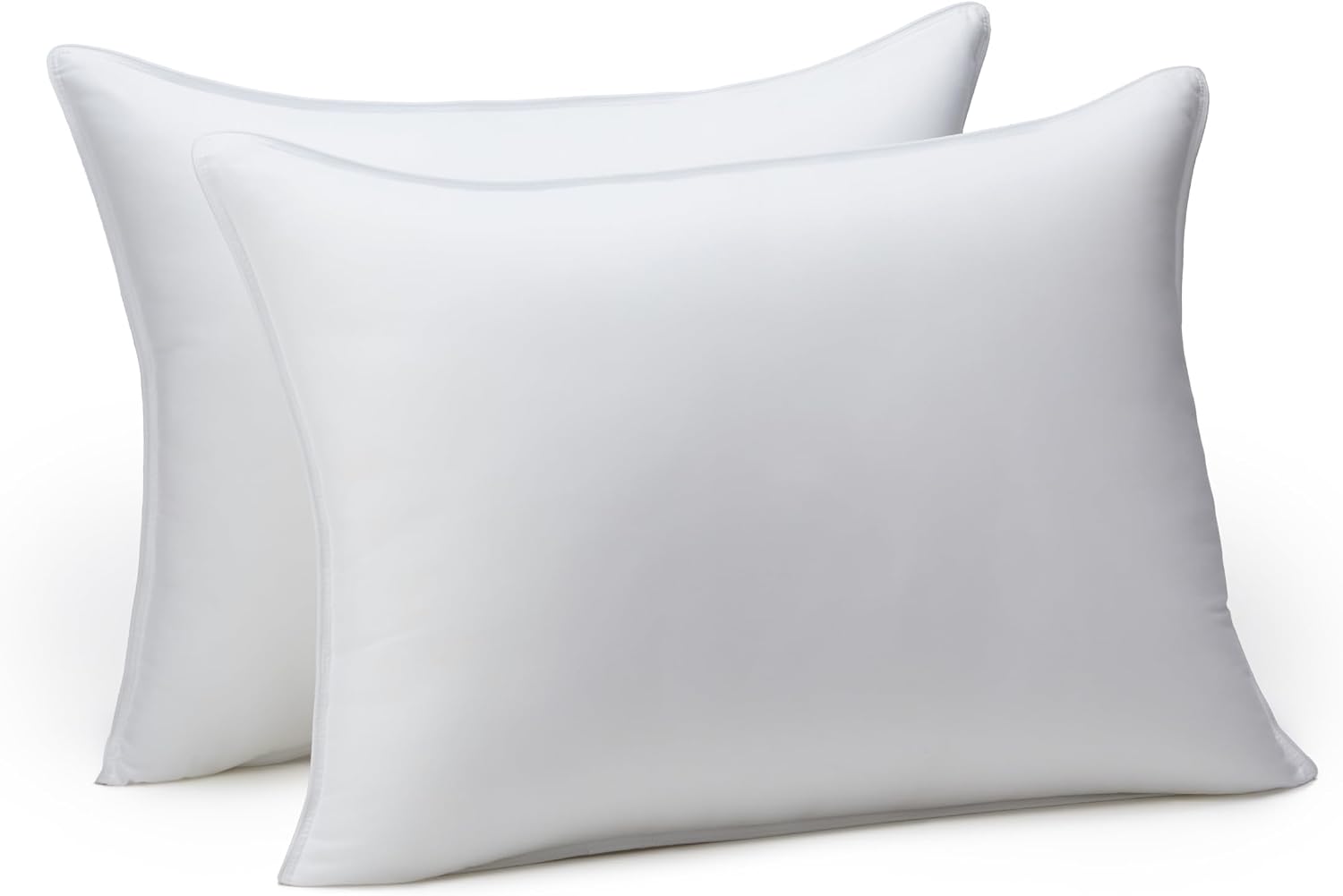
Budget pick: Amazon Basics Down Alternative Pillow for Side and Back Sleepers, Medium Density, Standard Size, 26" x 20", 2-Pack, White
 Visit on Amazon →
The listing is refreshingly honest about who it is for. It names side and back sleepers and calls itself medium density, and it does not pretend to be a stomach pillow. Two standard pillows in one order is exactly what a guest room needs, and it is the set I would buy before I spent real money on anything else.
What to check when the box arrives: vacuum-sealed pillows need time. Give them a full two days to plump. I have zero patience and have slept on the flat version on night one anyway, and I can tell you the difference between night one and night three is not subtle.
Then check three things over the first two weeks. First, whether both pillows in the two-pack end up at the same loft, because sets sometimes ship uneven. Second, whether the fill migrates to one corner by morning and leaves a flat spot under your neck. Third, whether it survives a wash without the casing going lumpy.
Flaws but not dealbreakers: down alternative compresses faster than buckwheat or a well-made shredded fill, so plan on replacing it sooner than you would a heavier pillow. That is the trade for the price and for a fill that sleeps soft instead of crunchy.
Anyone setting up a guest room, or anyone who wants a soft, low-commitment pillow to test their own sleep position before spending more, should start here.
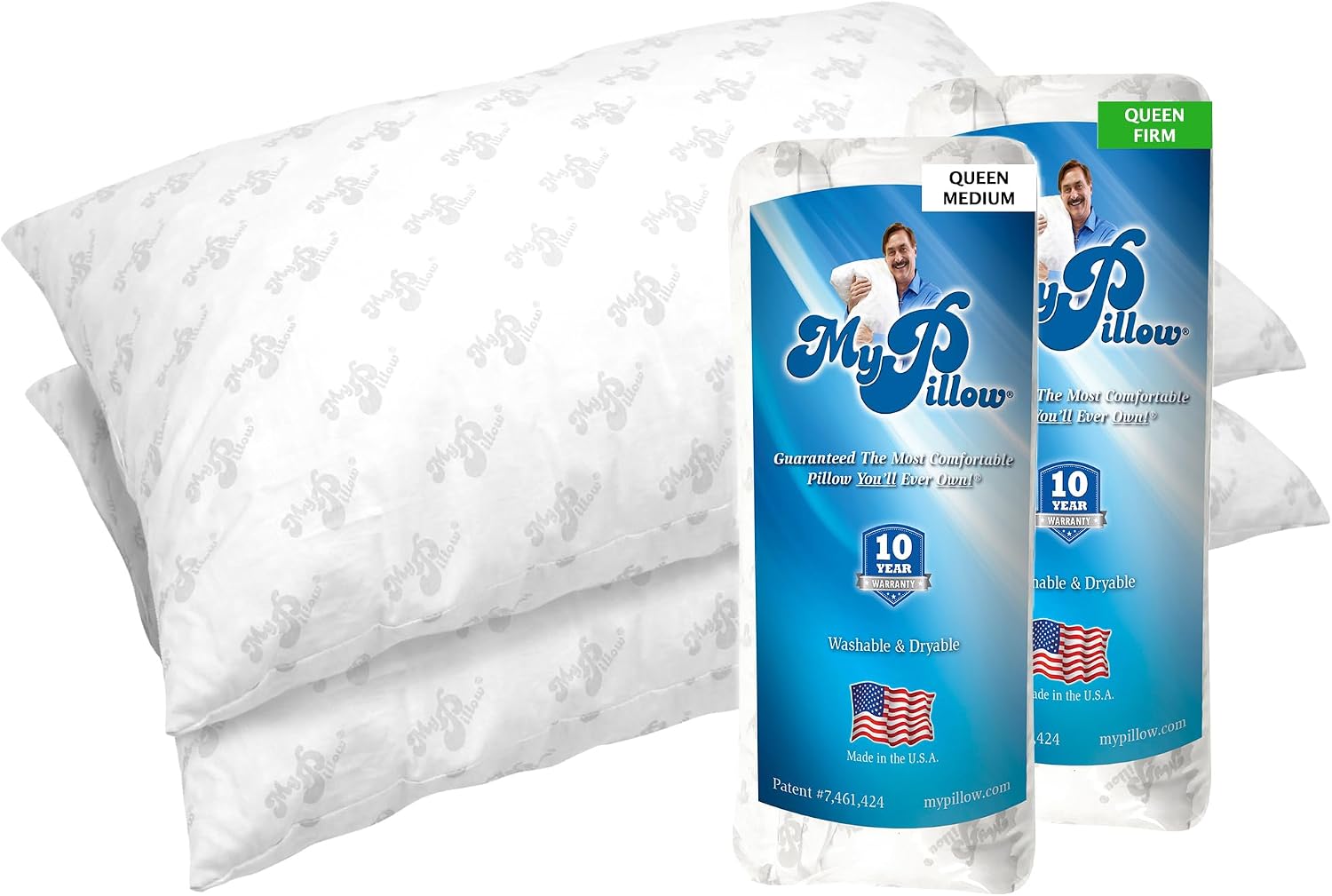
Our pick: MyPillow Bedding Bed Pillows for Sleeping Queen Size, Set of 2, for Back, Stomach or Side Sleepers - My Pillow Classic Pillow [Queen, Combo]
 Visit on Amazon →
This is the queen set of two, and the pitch is the hardest claim in bedding: one pillow that works for back, stomach, and side sleepers. I am suspicious of that claim on principle, because I have watched pillows fail in at least one position over and over.
Here is how to test it honestly. Sleep on it in your own position first, and judge the loft against your shoulder width. Then sleep a night on your other side or your back and see whether the fill stays where your neck needs it or drifts into a lump behind your head. Then, if you can, hand it to a stomach sleeper for a night. Stomach sleepers need thin, and any pillow sold as fitting all three positions usually turns out to be a compromise for at least one of them.
What I like about it as a purchase: the queen two-pack means Tom and I can each take one, and the fill is the kind of fill that responds to how you sleep rather than fighting you. What to watch for: the same things that get every pillow returned. Chemical odor that does not fade after a week of airing out, and fill that will not stay distributed.
Flaws but not dealbreakers: a pillow that promises three positions rarely wins all three. If you are a committed stomach sleeper, expect to fold it, flatten it, or keep looking.
Anyone who shares a bed with a sleeper in a different position, or who changes position during the night, will get the most out of this one.
How to test a pillow in your first 30 nights
This is the workflow. It works on any pillow, at any price, and it takes thirty nights and about thirty seconds a morning.
Step one: let it breathe. Most pillows arrive vacuum sealed and flat as a pancake, and everyone panics. Give it 48 hours out of the packaging before you judge anything. If there is a chemical odor, air it near an open window. If the smell is still there after a week, that is a return, not a patience problem.
Step two: match the loft to your position. Side sleepers need enough height to fill the gap between the head and the shoulder without going flat by 3 a.m. Back sleepers need the curve behind the neck supported while the head stays roughly level with the shoulders. Stomach sleepers need the thinnest pillow in the house, and if your head is being pushed up, the pillow is wrong no matter what the listing says.
**Step three: press on it with your